Tag Archive: LEVA-EU member news

  1. Seated electric scooters drive growth in shared micromobility

    Comments Off on Seated electric scooters drive growth in shared micromobility

    Source: Electrek

    LEVA-EU member Lime has reported a significant increase in ridership in the US city of Seattle last year, with usage rising by 61%, a surge which the company attributes in large part to the introduction of its seated electric scooter, known as the LimeGlider. The vehicle represents a departure from traditional stand-up scooters, highlighting how incremental design changes can have a substantial impact on adoption in urban transportation.

    According to Lime, the LimeGlider was developed to appeal to a broader segment of riders, particularly those who may feel uncomfortable standing on a scooter or pedalling an e-bike. Unlike conventional scooters, the LimeGlider features a fixed seat and a more stable riding posture, while maintaining throttle-only operation. The design places it between a scooter and an e-bike, offering a familiar and less intimidating option for casual riders.

    It has been suggested that comfort and perceived safety played a key role in attracting new Lime users. Many of these riders are outside the category of experienced cyclists or frequent scooter users, so may have been deterred by balance concerns or the physical fatigue associated with standing for longer trips. The seated format allows riders to place their feet down when stopped and provides a more relaxed experience over uneven pavements, making the vehicle suitable for errands, commuting, and longer urban journeys.

    The popularity of Lime’s seated e-scooter in Seattle suggests that seated micromobility options can provide greater access to shared transportation by accommodating a wider range of physical abilities and confidence levels. By reducing barriers to entry, vehicles like the LimeGlider may help convert occasional or hesitant users into regular riders, therefore helping more users to travel sustainably.

    Seattle’s supportive approach to micromobility has also been cited as a contributing factor to Lime’s growth. The city has invested in infrastructure improvements, including the installation of more than 200 designated parking corrals for shared bikes and scooters. These corrals are intended to reduce pavement clutter, address public concerns about improper parking, and make it easier for riders to end trips in compliance with local regulations.

    The combination of improved vehicle design and supportive infrastructure appears to have strengthened Lime’s position in what is considered a mature US micromobility market. By focusing on usability and real-world challenges rather than radical technological changes, the company has been able to significantly expand its rider base.

    The Seattle results highlight a broader lesson for the micromobility sector: growth does not always depend on faster speeds or advanced features. In some cases, relatively simple changes (such as offering riders the option to sit down) can play a decisive role in increasing adoption and reshaping how people move through cities.

  2. Lime wins Net Zero award

    Comments Off on Lime wins Net Zero award

    Source: Lime

    The LEVA-EU member has been awarded Net-Zero Strategy of the Year by edie, a leading UK-based sustainability publication, in recognition of its emissions reduction goals and progress toward decarbonizing urban transportation. The award highlights the shared mobility provider’s performance in setting ambitious climate targets, transparently reporting emissions, and delivering measurable reductions while expanding access to shared electric mobility.

    The recognition comes as cities worldwide seek solutions to address transportation-related emissions, which account for approximately one-third of global carbon output. Personal travel represents the largest portion of these emissions, making urban mobility a critical focus area for climate action.

    Addressing transportation’s carbon footprint

    Lime’s strategy focuses on shifting trips away from private car use toward shared electric bikes and scooters, while reducing the company’s own environmental impact as its services scale. According to the company, this dual approach is essential to ensuring that growth in shared mobility does not come at the expense of climate goals.

    The company’s net-zero framework is aligned with the Paris Agreement and includes comprehensive reporting across Scopes 1, 2, and 3 emissions. Lime has committed to achieving net-zero emissions across all material areas of its business by 2030, including energy consumption, operational vehicles, logistics, and vehicle manufacturing.

    A comprehensive net-zero blueprint

    Lime’s decarbonisation efforts extend across its operations and supply chain. All facilities and vehicle charging are powered by 100% renewable electricity, and more than 70% of the company’s global operations fleet has transitioned to electric vehicles. In the United States, Lime has fully decarbonised port-to-hub freight trucking using electric trucks, while in Europe, lower-emission freight solutions now serve more than 20 cities.

    Vehicle design has also been a focus area. Lime designs its vehicles in-house to improve durability, repairability, and longevity. New generations of e-bikes and e-scooters incorporate lower-carbon aluminium, and batteries are produced using renewable energy.

    Measurable progress ahead of schedule

    Lime reports that its sustainability initiatives have delivered significant results ahead of target timelines. Since 2019, the company has reduced absolute Scope 1 and 2 emissions by 76% and cut Scope 3 carbon intensity by 63%. These reductions were achieved four years ahead of target for Scope 1 and 2 emissions and two years ahead for Scope 3.

    In 2025 alone, Lime estimates its services replaced approximately 38 million car trips, contributing to reduced congestion and emissions in cities.

    Urban impact and industry significance

    The broader effects of Lime’s growth are increasingly visible. Data from the City of London indicates that bicycles now outnumber cars on city streets, a trend The Economist has linked in part to the expansion of shared cycling options, including Lime.

    The Net-Zero Strategy of the Year award highlights the role shared electric mobility can play in supporting cleaner, more sustainable cities, as Lime continues to advance toward its 2030 net-zero target.

  3. Beaufort wins two Test-Aankoop awards

    Comments Off on Beaufort wins two Test-Aankoop awards

    Source: Nieuwfiets

    Beaufort e-bikes, a brand of LEVA-EU member Bizbike, have recently been awarded “Best Buy” and “Best in Test” accolades from Belgium’s largest independent consumer organisation.

    The Belgian brand’s Beaufort BAY received the “Best Buy” label and its BAY Infinite received the “Best in Test” label from Test-Aankoop. Both models share the features of a belt drive and a 720Wh battery, while the Infinite is also equipped with Enviolo gearing.

    Beaufort Product Manager Louis Vanassche said the following about the brand’s achievement in receiving the prestigious Test-Aankoop awards:

    “I knew we had a good chance of winning one of the two labels, considering the price-quality ratio and the sense of (affordable) luxury we strive for at Beaufort. Winning both labels at once was beyond my wildest dreams. Talk about an excellent start to the new year!”

    In February 2024, Beaufort appointed a new brand and product manager, resulting in a new look and feel. This concept emphasises affordable luxury, with a growing focus on colour schemes and product development. According to Vanasche, this latest achievement at the Test-Aankoop awards shows that the new approach is clearly paying off.

    “This is actually the second time in a short period that Beaufort has had cause for celebration. In the fall of 2025, Bike Republic, the largest bicycle retail chain, decided to add the brand to its range.”

    Brand manager Pieter Vander Linden also commented that its award winning bikes would be exhibited at Velolfollies from January 16-18:

    “Last year, our stand with the colorful tree attracted attention, and this year we expect the Test-Aankoop labels to be a big hit. These labels underscore what we stand for: quality. We hope this will attract new customers and introduce them to Beaufort,” says Pieter Vander Linden, Brand Manager.

  4. VAN RYSEL´s most ambitious project equipped with MAHLE M40

    Comments Off on VAN RYSEL´s most ambitious project equipped with MAHLE M40

    VAN RYSEL, the premium cycling brand born in Flanders, presents the FTP² concept bike at VeloFollies (Lille, France).

    This radical prototype is designed to double riders’ Functional Threshold Power (FTP) and deliver the thrill of pro-level speed.

    Not for sale, FTP² is a bold statement of innovation, showcasing what’s possible and inspiring the future of cycling.

    Designed for speed

    Developed over several years with partners like Swiss Side and MAHLE SmartBike Systems, FTP² is equipped with a custom MAHLE M40 motor that breaks free from conventional e-bike speed limits to explore extreme performance.

    High-end components complete the concept:

    • Drivetrain: SRAM Red AXS with Praxis carbon cranks
    • Wheels: SWISS SIDE Hadron³ 850 for maximum aerodynamic efficiency

    The result: intelligent power management, precision control, and safety at unprecedented speeds.

    “With FTP², we stepped outside traditional frameworks to explore extreme performance in a controlled way. Every component was designed as part of a single system to push boundaries.”
    Wim Van Hoecke, FTP² Project Manager & VAN RYSEL E-Bike Product Manager.

    Engineered Around the MAHLE M40

    At the core of the FTP² concept lies the MAHLE M40 motor, uniquely developed for this project to explore a new dimension of performance.

    By amplifying the rider’s input beyond conventional limits, the M40 enables the FTP² to investigate extreme speed scenarios in a controlled environment, serving as a rolling laboratory for future e-road and high-performance e-bike applications.

    The seamless integration of the motor within the carbon frame underlines how advanced electric assistance can coexist with pure performance, aerodynamics and system-level design.

    A Rolling Laboratory for Future Innovation

    More than a concept bike, FTP² is a technological demonstrator designed to challenge existing frameworks and inspire future developments across the cycling industry. From the fully integrated cockpit and proprietary electronics to the radical shoe–pedal interface and advanced aerodynamic textiles, every element has been conceived as part of a single ecosystem.

    While FTP² will not be commercialised, the knowledge gained from this project will directly influence future product development, redefining how performance, safety and electric assistance can be combined at the highest level.

  5. VIIALA founder expresses concerns about e-bike production misconceptions

    Comments Off on VIIALA founder expresses concerns about e-bike production misconceptions

    Source: Nieuwsfiets

    According to Tomi Viiala, leader of the LEVA-EU member, misunderstandings about the true cost of manufacturing electric bicycles continue to persist, even among industry experts. A common assumption is that an e-bike “costs almost nothing to make”, but Viiala argues that this belief is fundamentally incorrect given the technical complexity of modern e-bikes.

    Although e-bikes retain the outward appearance of traditional bicycles, Viiala explains that this familiar design masks an advanced and highly integrated technological system. “Two wheels, a frame, and handlebars give the impression of simplicity. But beneath that familiar form lies extremely compact and integrated technology,” Viiala stated in a recent LinkedIn post. He emphasised that while electric cars and motorcycles benefit from large housings for batteries, electronics, and cooling systems, bicycles offer no such space. All components must be incorporated into a lightweight frame without compromising handling, stability, or aesthetics. “Every millimeter and every gram counts,” he said.

    According to Viiala, a high-quality e-bike consists of hundreds of components distributed across multiple systems. These include power electronics, battery cells with thermal management, sensors, software, wiring, displays, and mechanical parts that must function seamlessly with electronic systems. In addition to performance requirements, these elements must remain quiet, safe, reliable, easy to maintain, and ideally invisible to the rider.

    Viiala stresses that the final cost of an e-bike is determined less by individual components and more by how effectively they are integrated. Factors such as thermal management directly affect battery lifespan, cable routing influences frame properties, and software defines the overall riding experience. Achieving this level of integration requires multidisciplinary teams, long development cycles, extensive testing, and close collaboration with suppliers.

    The persistence of incorrect assumptions about e-bike pricing, Viiala warns, can have negative consequences for the industry. The perception that e-bikes are overpriced may pressure manufacturers to reduce investment in research and development, tooling, safety certifications, and software. “This ultimately leads to products that fall short in terms of reliability and durability,” Viiala cautioned.

    He also noted that the greatest challenge in e-bike development is not simply adding advanced technology, but doing so without compromising the essence of cycling. An e-bike should feel light, intuitive, and visually refined. “The trick is to add technology without losing the bike’s character. It’s precisely this balance between performance, integration, and experience that makes e-bike development one of the most demanding product challenges in modern mobility.”

    Viiala is currently collaborating with François-Henri Bennahmias on the development of a high-end e-bike featuring radically new technology, high performance, and a projected price of up to €25,000.

  6. VIIALA unveils first physical models in Dubai

    Comments Off on VIIALA unveils first physical models in Dubai

    Source: Nieuwsfiets

    The LEVA-EU member has revealed an exclusive look at its bicycle models, as it moves to its technical development phase.

    VIIALA publicly presented its bicycle concepts for the first time at a private industry event in Dubai, marking a significant milestone in the company’s development journey. The invitation-only presentation was held at the Museum of the Future and introduced physical models to a select group of industry stakeholders.

    Founded by Tomi Viiala and François-Henri Bennahmias, VIIALA is now moving beyond the conceptual and design stage into a phase focused on technical development, testing, and validation. According to the company, the models shown in Dubai represent the foundation for transforming design concepts into fully functional, rideable bicycles. This next development phase is expected to continue through 2026.

    VIIALA positions itself as a brand focused on high-end, technically rigorous mobility solutions, with an emphasis on advanced materials, structural engineering, and digital integration. Rather than pursuing incremental product updates, the company has adopted a systematic development strategy aimed at early identification of technical risks and data-driven validation of design decisions.

    A central element of this approach is VIIALA’s collaboration with ASTRO, a testing and research facility which specialises in additive manufacturing and materials science. ASTRO supports the validation of components, joints, and structures, applying testing methodologies more commonly associated with aerospace and advanced industrial sectors. VIIALA states that this partnership is intended to ensure durability, consistency, and long-term product performance.

    The company has drawn parallels between its development philosophy and aerospace-grade engineering, focusing on precision, verification, and a willingness to pause or redesign when performance thresholds are not met. This approach, according to the founders, is designed to deliver bicycles developed to exceptionally high technical standards rather than conventional industry benchmarks.

    Alongside technical development, VIIALA is investing in building a distinct brand identity and communication platform. Through regular publications, the company aims to share insights into its design philosophy, engineering decisions, and sources of inspiration, offering transparency into its development process and long-term positioning within the premium mobility market.

    VIIALA was first introduced publicly in September 2025. Details regarding final specifications, commercial launch timelines, and distribution strategy have not yet been disclosed. The company expects to share further information on its progress and next steps during 2026.

    A full report of VIIALA’s Dubai presentation can be accessed on the brand’s LinkedIn.

  7. Microlino wins at Automobile Awards in France

    Comments Off on Microlino wins at Automobile Awards in France

    Source: Microlino

    The LEVA-EU member announced that it won the Mobilians Innovation in Decarbonization Award at the awards ceremony which took place in Paris, with the achievement acknowledging the microcar brand’s contribution to driving sustainable urban mobility.

    Yannick Boulch, who leads Microlino France, represented the company at the awards ceremony. Microlino expressed gratitude to the Mobilians organization and the Automobile Awards jury, noting that the recognition reinforces the value of challenging established norms in mobility and continuing to develop compact, responsible transport solutions for future cities.

    Microlino has stated that this accolade highlights its commitment to reimagining mobility with lightweight, resource-efficient vehicles which have been innovated especially for everyday urban use. The brand’s decarbonization strategy outlines long-term solutions which are designed to reduce environmental impact as they maintain the essential practicality required for city driving.

    Microlino’s impact on sustainable mobility in Europe

    Reportedly, over 5,200 of its vehicles are being used across Europe, and for typical urban usage, the compact electric vehicles emit up to 50% lower CO₂ emissions compared with conventional electric cars. The company states that this figure demonstrates the tangible benefits of smaller, simpler, and more efficient mobility solutions.

    For Microlino, winning at the Automobile Awards highlights its impactful role in advancing micro-mobility as a sustainable, practical alternative in the European urban transport landscape.

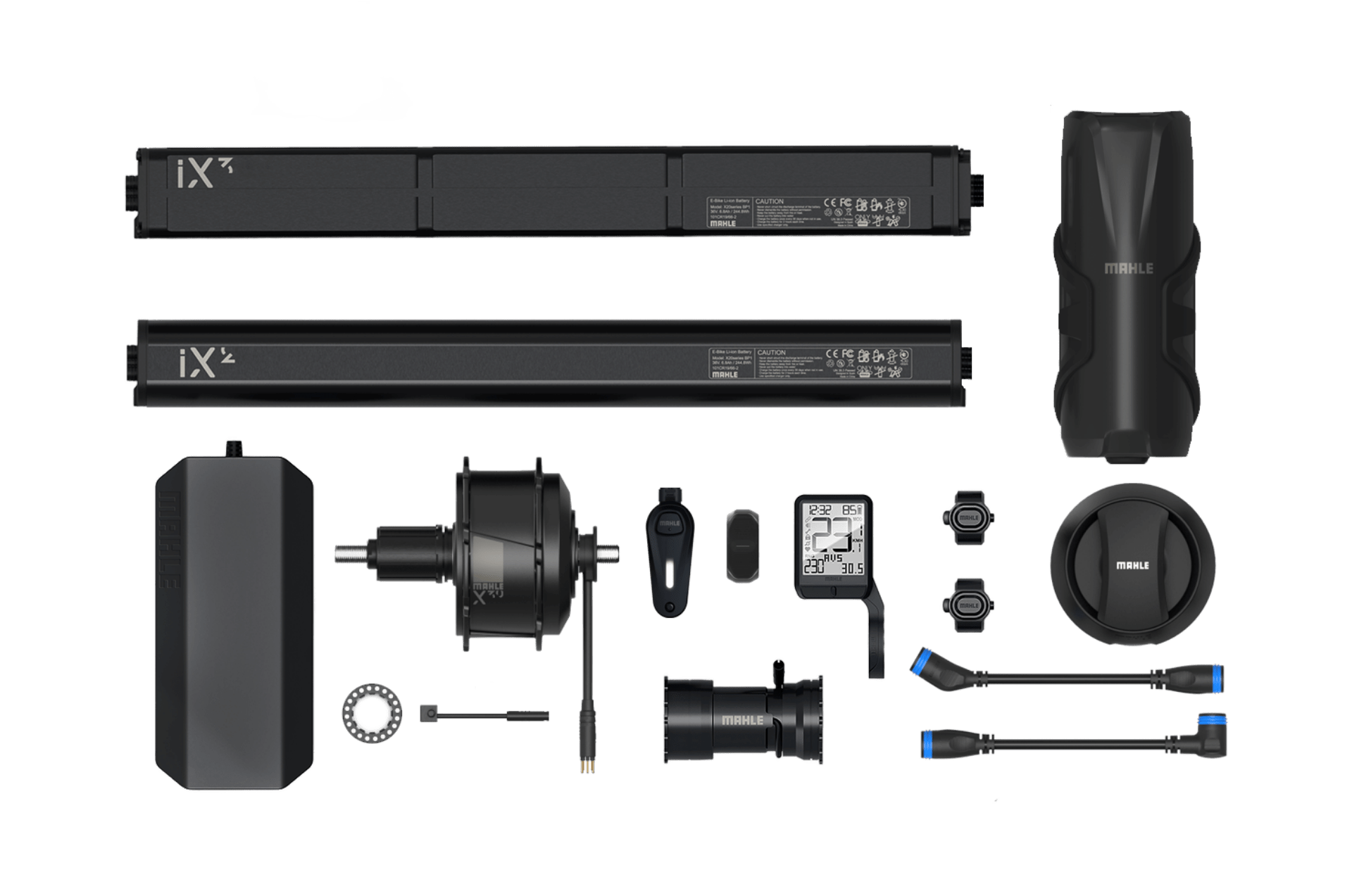
  8. MAHLE improves dealer services in Austria and Germany

    Comments Off on MAHLE improves dealer services in Austria and Germany

    Source: MAHLE SmartBikes

    The LEVA-EU member has announced a new logistics process for accelerating warranty deliveries in Germany and Austria.

    The new logistics initiative is being introduced to reduce delivery times for warranty replacement components, enabling dealers in Germany and Austria to receive batteries more quickly and improve service efficiency for riders.

    Under the updated process, dealers will continue to request and manage warranty replacements as they have previously. The primary improvement is significantly shorter delivery times, whoch enables the downtime of riders to be minimized.

    Initially, the accelerated logistics will cover both internal and external batteries for warranty replacements in the German and Austrian markets. Plans are already in place to expand the faster delivery process to additional system components, further strengthening after-sales support for dealers in the region.

    The initiative reflects a broader commitment to enhancing service efficiency and ensuring timely support for customers across Europe.

  9. vanRaam bikes available for renting in Paris

    Comments Off on vanRaam bikes available for renting in Paris

    Source: vanRaam

    The LEVA-EU member’s adaptive bikes are set to be introduced to the streets of the Île-de-France region as part of the Véligo Location long-term bike rental programme in collaboration with Fleeta, with availability beginning from 5 January.

    More than 300 vanRaam bicycles have been specially manufactured for inclusion in the new fleet, expanding access to adaptive and inclusive cycling options across the Paris region. The deployment will include a range of vanRaam models designed to accommodate different mobility needs and riding preferences.

    Among the bikes entering service are vanRaam’s low-seat Balance models and the Easy Rider tricycles, which are designed to prioritise comfort and stability. The fleet will also feature tandem options intended to support shared and assisted riding, including the Fun2Go side-by-side tandem and the Kivo adult–child tandem, enabling users to ride together safely.

    The project has been delivered in collaboration with mobility partner Fleeta, which has worked alongside vanRaam to support the integration of the adaptive bikes into the Véligo Location scheme.

    The distinctive blue vanRaam bicycles are expected to become a visible addition to the Île-de-France cycling network, supporting greater accessibility and inclusivity within the region’s shared mobility offering.