Tag Archive: cycling safety

  1. Ellio joins cycling safety campaign

    Comments Off on Ellio joins cycling safety campaign

    Source: Ellio

    The LEVA-EU member has joined the Belgian Province of Antwerp’s cycling safety initiative alongside various companies, authorities, and the Flemish Government, and has provided one of its e-bikes to assist the campaign.

    On September 15th, the campaign was launched with the slogan ‘Speed feels good, arriving feels better.’

    Ellio explains that the campaign has been introduced due to citizens more frequently commuting by bike or speed pedelec, and in light of the more challenging conditions cycling presents during this autumnal time of year. With evenings becoming darker earlier and the weather becoming more difficult, the campaign intends to help cyclists prepare and ride better for these conditions.

    The campaign notes the importance of preparation, ensuring a technically sound bicycle, lighting that’s properly adjusted, and high-vis clothing. It is also encourages riders to participate in bicycle training, due to reports that around 66% of bike accidents occur due to a steering error or slipping, with this statistic decreasing by over 30% after training.

    Ellio states that the campaign aligns with its long-standing principles about prioritising riding comfort and enjoyment, rather than going as fast as possible. It emphasises that part of the cycling campaign’s slogan “arriving feels better” is about ensuring riders feel prepared for the varied weather conditions they could encounter.

    Ellio has tips for cycling safely in autumn on its website, and more information about Antwerp’s cycling safety campaign can be accessed online.

    Ellio riders total 100,000 km

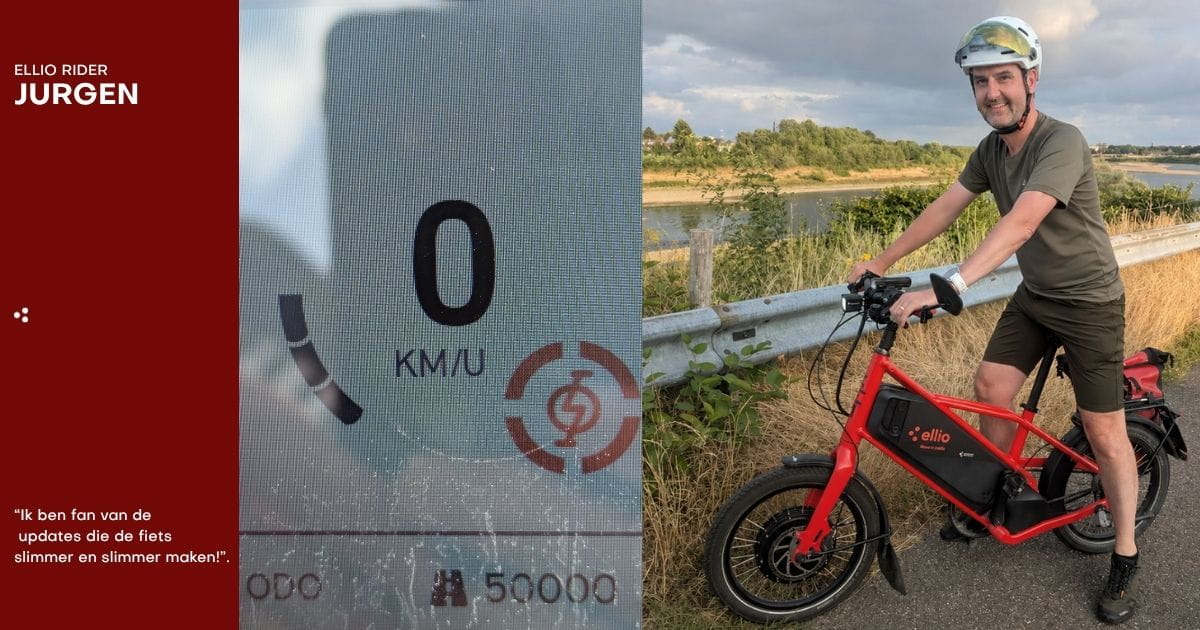
    In other news, Ellio has shared the story of riders Jurgen and Thierry, who both bought their speed pedelecs at around the same time, before later meeting through Ellio. Coincidently, they later became the first Ellio customers to achieve the 50,000 km riding milestone at almost the same time, achieving a combined total of 100,000 km.

    What they appreciate the most about Ellio

    Both riders reported the automatic features of their speed pedelec as standout highlights. Jurgen loves the automatic shifting system and speed limiter which makes riding 45 km/h feel achievable with ease.

    As well as the features mentioned above, Thierry also favours Ellio’s tailored assistance. He states that his Ellio is his first choice of transportation unless the weather is really bad, the distance is too far, or he has too much of a heavy load to transport.

    Learn more about their journey to reaching 100,000 km, and what’s next for them in the full article on Ellio’s website.
  2. Study highlights potential for safer cycling in the DACH region

    Comments Off on Study highlights potential for safer cycling in the DACH region

    Source: SAZ BIKE

    A recent cross-border study conducted in Germany, Austria, and Switzerland has investigated methods to enhance cycling safety in confined spaces.

    The research, undertaken as part of the Radbest project, focused on the overtaking distance of motor vehicles when passing cyclists, revealing significant disparities in adherence to prescribed safety measures.

    Measuring overtaking distances

    The study employed specialized bicycles fitted with multiple sensors to measure the lateral distance maintained by motor vehicles during overtaking maneuvers. Over 7,000 instances of overtaking were analyzed across the three countries. While Germany and Austria mandate a minimum overtaking distance of 1.5 meters, Switzerland lacks such a regulation. The findings indicate that, despite existing laws in Germany and Austria, cyclists are frequently overtaken with insufficient space. In Switzerland, where no minimum distance is enforced, the prescribed safe distance was even more frequently undercut.

    Perceived danger and cycling behavior

    The study’s findings suggest that inadequate overtaking distances contribute to a widespread perception of cycling as unsafe, which discourages many individuals from using bicycles as a primary means of transport. Survey responses from cyclists using the test routes highlighted that a significant portion of the population views cycling as a risky activity. Notably, the statement “Cycling on the road requires courage” found stronger agreement among Swiss respondents compared to their German and Austrian counterparts, reflecting a heightened sense of vulnerability among cyclists in Switzerland.

    Proposed safety measures

    Given the challenges of ensuring cyclist safety in constrained urban environments, the Radbest researchers emphasize that there is no single optimal solution. Instead, they recommend a tailored approach based on specific spatial limitations. One proposed measure involves the introduction of narrow core lanes with wide bike lanes on both sides. However, the study also cautions that roads featuring two-sided cycling lanes without a central guiding line tend to result in significantly more close passes by vehicles.

    As an additional safety measure, the researchers advocate for the clear marking of designated cycling spaces and the enforcement of a speed limit of 30 km/h in areas with limited road width. These measures, they argue, could help mitigate the risks associated with cycling in confined spaces and encourage more people to consider bicycles as a viable and safe mode of transportation.

    The Radbest study underscores the necessity of continued efforts to improve cycling infrastructure and regulations across the DACH region. By addressing safety concerns, policymakers can foster a more inclusive and cyclist-friendly transport environment, potentially increasing bicycle usage and promoting sustainable urban mobility.